
The complete guide
How to Choose and Use a Jigsaw Puzzle Roll Up Mat
A half-finished puzzle can leave you with an awkward choice. Keep the table covered until the last piece goes in, or pack away the work you wanted to finish later. That matters when the same table is also used for meals, work or other hobbies.
A Jigsaw Puzzle Roll Up Mat offers another way to pause. You build on the felt, then roll the working surface around an inflatable tube when you need the space. It is a simple idea, but size, setup and handling all affect whether it suits your routine.
This guide explains what is included, what to check before buying and how to use the mat without expecting it to behave like a solid board.
What this puzzle mat includes
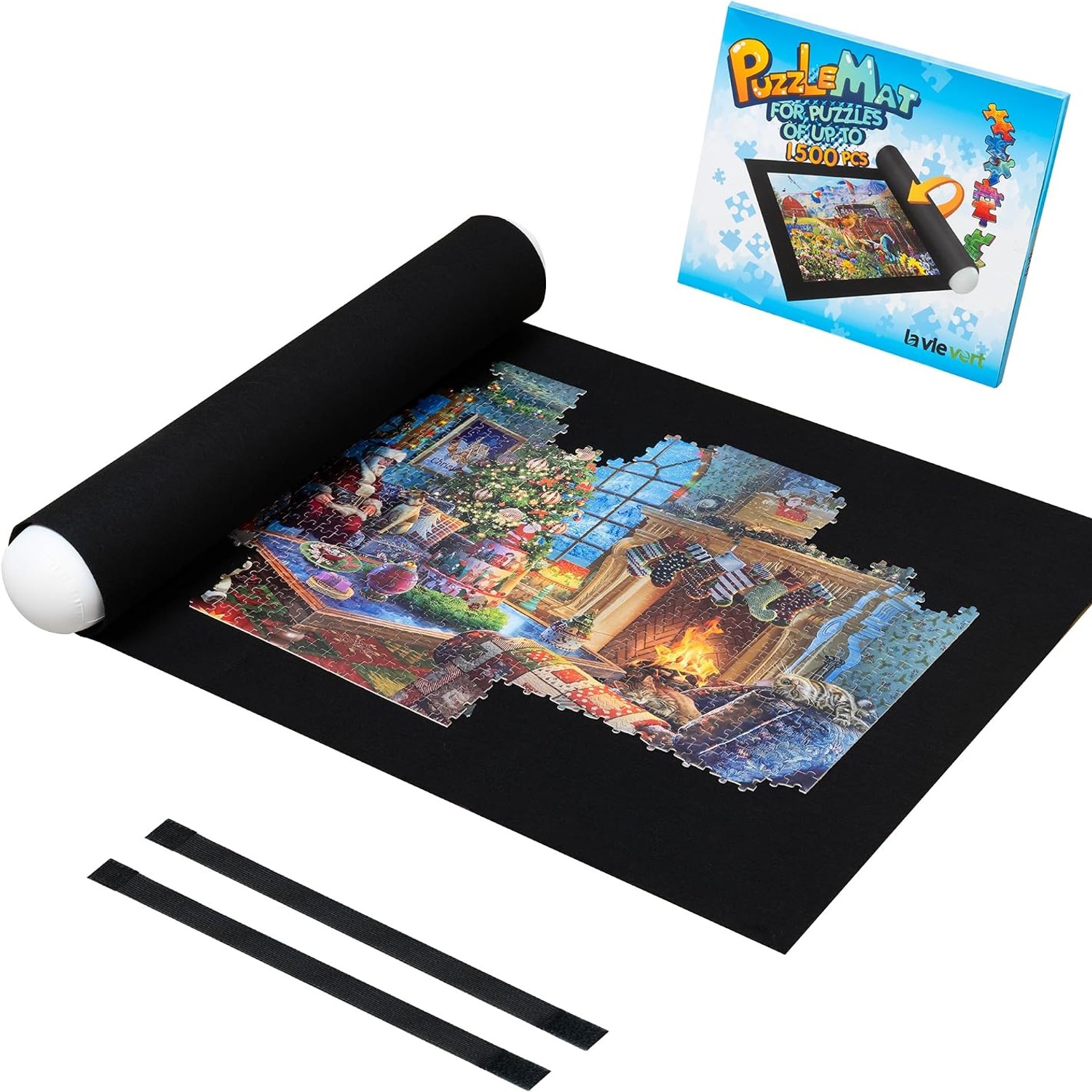
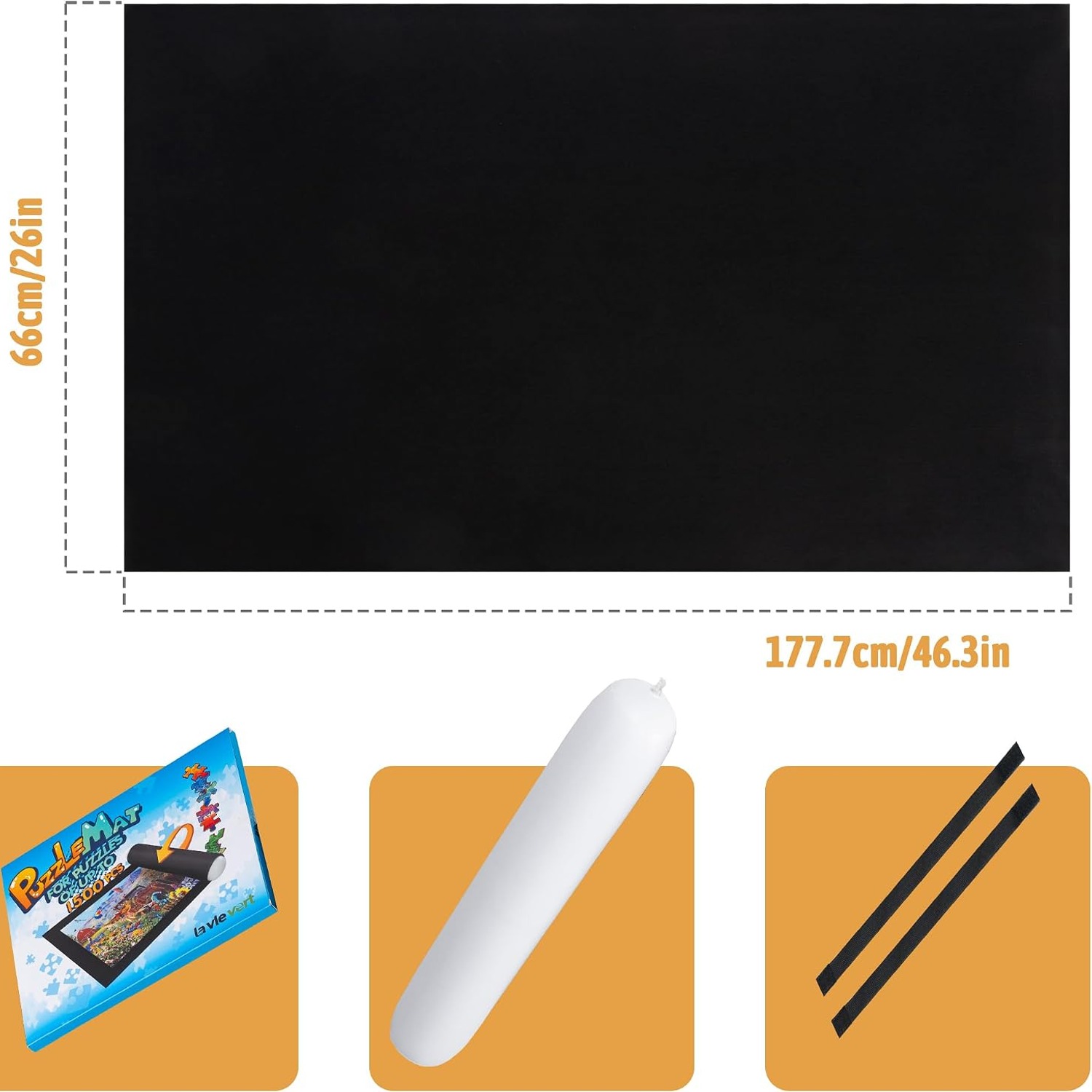
The set has one black felt mat, one inflatable tube and two elastic bands. You supply the puzzle and a smooth, level surface to work on. There is no jigsaw puzzle in the box.
The mat is rectangular, with listed dimensions of 46.3 x 26 inches. It is described as suitable for puzzles up to 1,500 pieces. The recorded product weight is 0.32 kg, and portability is a listed feature.
Those details give you a useful starting point. They do not tell you the felt thickness, the tube's inflated diameter or the size of the finished roll. If you have a very specific storage space in mind, those missing measurements are worth keeping in mind.
How roll-up puzzle storage works
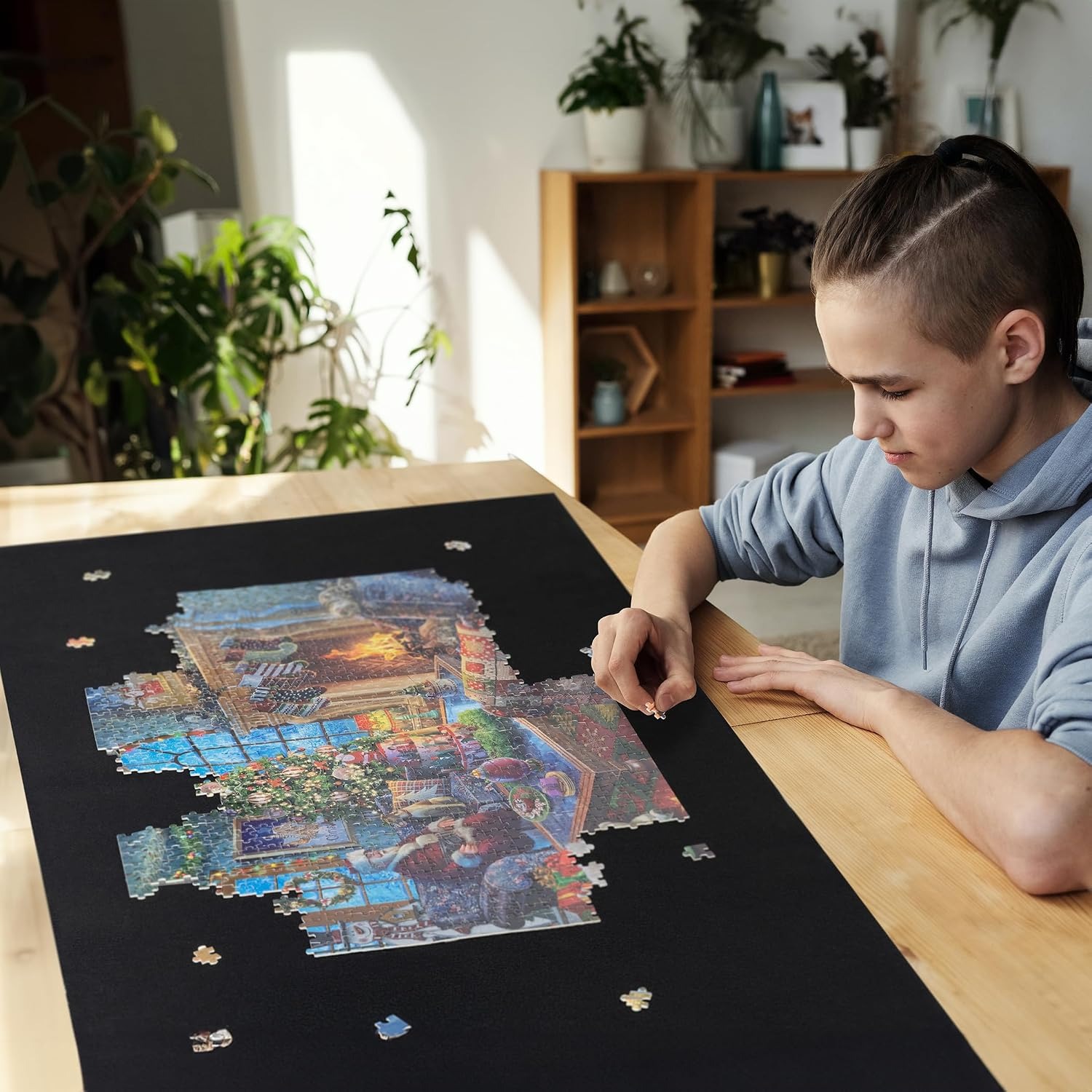
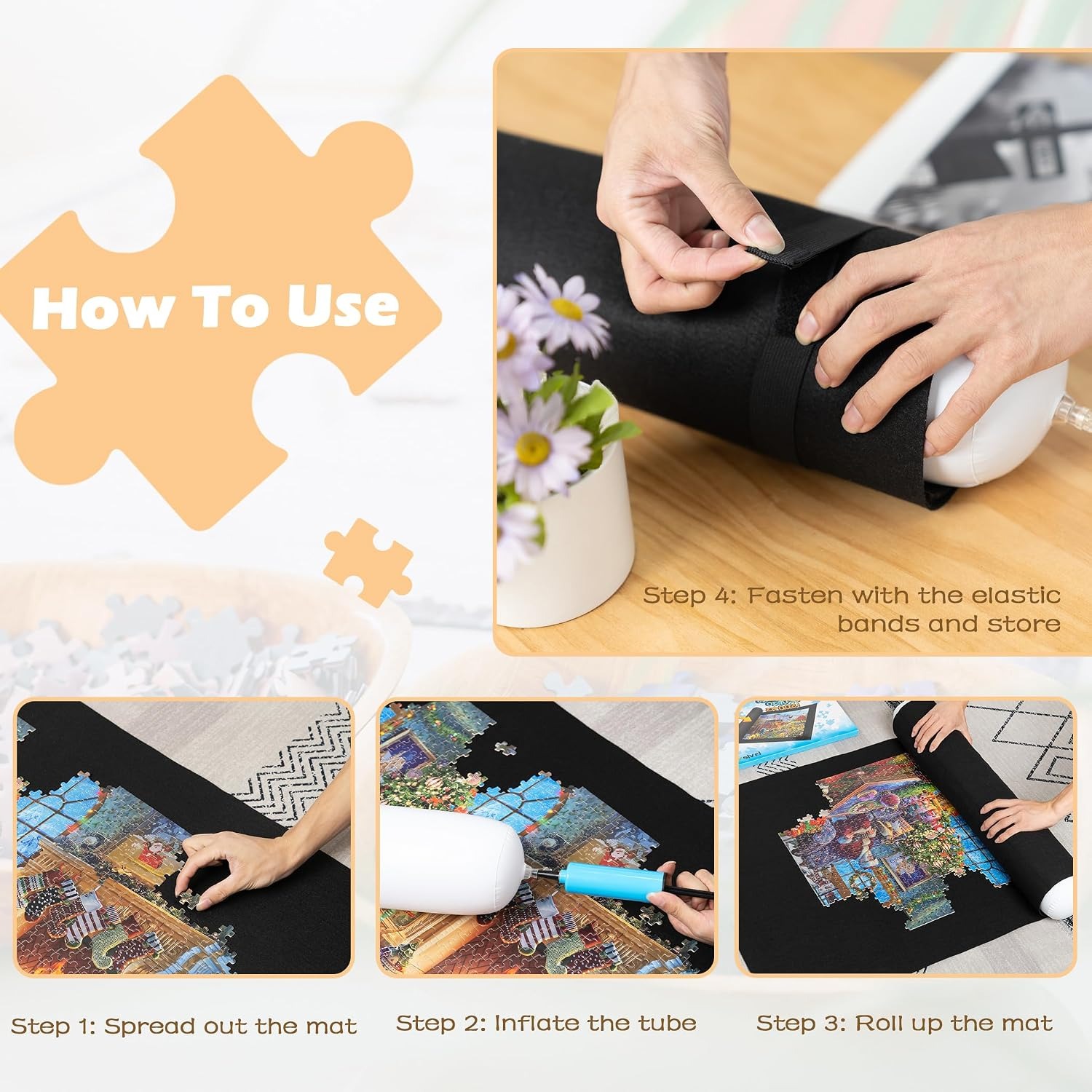
The felt is both your working surface and the part that rolls up. Start with it spread flat on a smooth, level table. Build the puzzle directly on top rather than trying to transfer a large unfinished section onto it later.
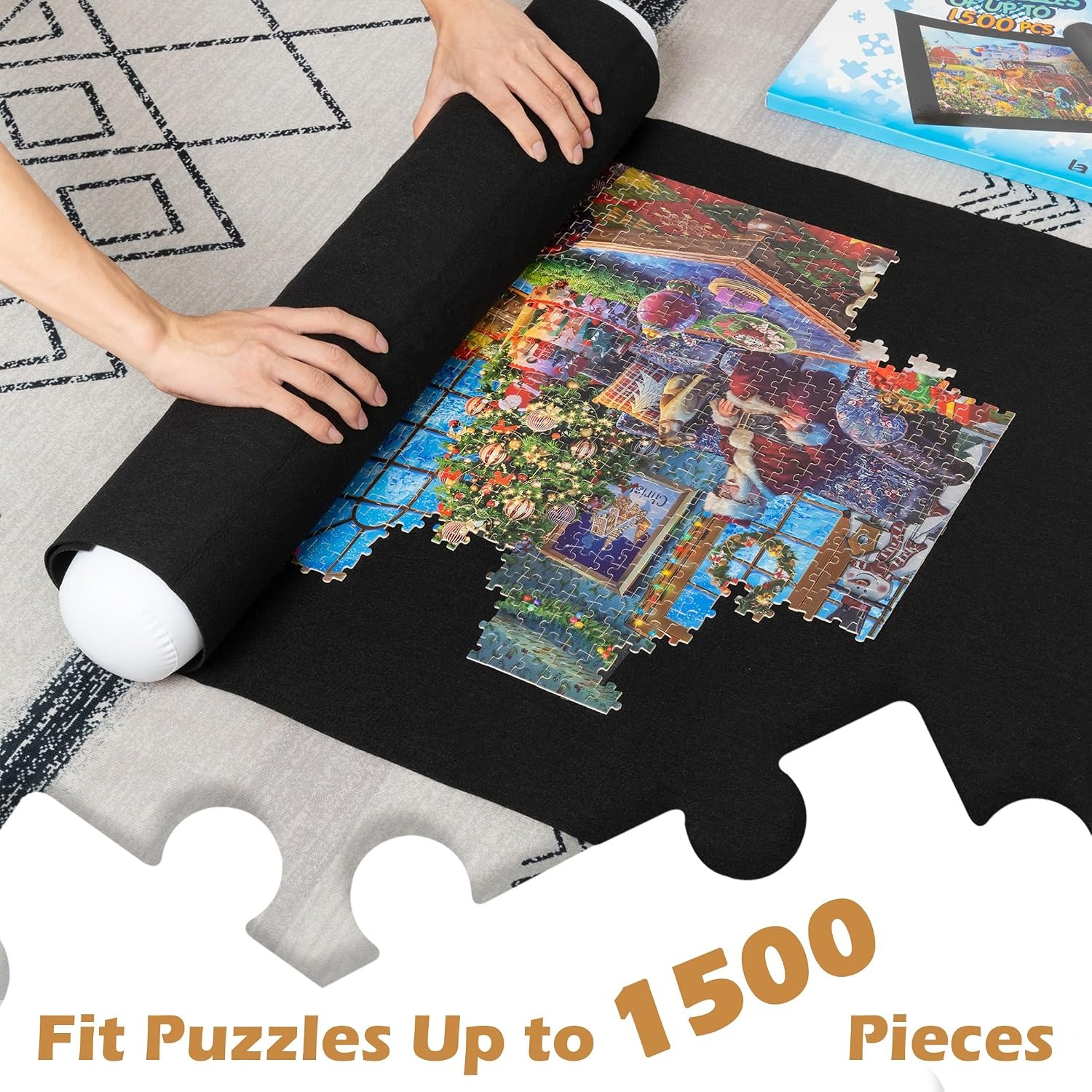
When you want to stop, inflate the tube and place it at one end of the mat. Roll the felt around the tube with even pressure. Once the mat is rolled, fasten both ends with the supplied elastic bands.
The tube provides a center for the roll, while the bands keep the rolled mat fastened. This is flexible storage, not a hard-sided case. Treat the finished roll with care rather than assuming it can be moved or stacked like a rigid box.
Check measurements before piece count
“Up to 1,500 pieces” is helpful, but it should not be your only size check. Puzzle pieces vary in size, and finished puzzles can have quite different shapes. Two boxes with the same piece count may need different amounts of table space.
Look for the finished dimensions on your puzzle box. Compare both length and width with the listed 46.3 x 26 inch mat. Also think about the extra room you prefer around the edges while you work.
A puzzle that nearly fills the surface may leave little space for loose pieces. If sorting on the mat is part of your routine, allow for that too. The best 1500 piece puzzle mat for your needs is one that fits your actual puzzle and working habits, not just the number printed on the box.
Make sure your table suits the mat
A tabletop puzzle mat needs support underneath it. Before starting, clear a smooth, level area and check that it is large enough for the section of felt you plan to use. Crumbs or small objects beneath the mat can interrupt the working surface.
Think about your seat and reach as well. You should be able to work on the puzzle without constantly pulling the mat around. Moving a loaded felt surface is different from sliding an empty one.
If your table is shared, decide where the roll will go before the first session. Having a storage spot ready makes the pause-and-pack routine more practical. Remember that the rolled dimensions are not given by the maker, so a narrow shelf may need checking in person.
Felt versus a rigid puzzle board
A felt puzzle mat and a rigid board solve the same broad problem in different ways. This mat rolls around a tube. A rigid board stays flat and needs a storage space that can accommodate its shape.
The roll-up design may appeal if you want a flexible surface that can be put away between sessions. It does, however, require rolling and unrolling each time you pause or restart.
If you prefer to keep every session on a firm base, compare that need with a board before buying. This set does not include a hard backing, drawers or a separate cover. Choosing between formats is mostly about how you like to work and where you can store the puzzle.
Working on the black felt surface
The black background can help colorful pieces stand out. That may be useful when you are looking through bright sections or checking the outline of a loose piece.
The maker describes the felt as non-slip. Even so, do not treat that description as a promise that pieces cannot move. Your puzzle's shape, the way you roll and how you carry it can all matter when handling unfinished work.
Give yourself time to get used to the surface. Before committing to a large puzzle, you can check how your pieces sit on the felt and how much space you want around them. That is more useful than relying on piece count alone.
Inflating and using the tube
The supplied directions say to squeeze the valve so the slit inside opens, then blow air into the tube. A pump is not listed in the package contents.
Follow any extra directions that arrive with the product. The maker does not give an inflation pressure, so there is no stated figure to work toward. Avoid guessing at technical limits that have not been provided.
Before rolling, have both elastic bands nearby. Place the inflated tube at either end of the mat and work with steady, even pressure. Rushing this step is unlikely to help you keep the roll neat.
Pausing and reopening your puzzle
Roll-up storage is meant to make stopping more manageable, but it is still worth allowing a few minutes to put things away. Look over the surface first and check where any loose pieces are sitting.
Roll carefully, then fasten both ends with the bands. Carry the roll gently to its storage place. The bands secure the roll, but they do not turn it into a sealed container.
When you are ready to continue, clear the table before opening it. Unroll on a smooth, level surface and inspect the puzzle before resuming. Some adjustment may be needed, so avoid expecting a guarantee that every piece will remain exactly where you left it.
Who this jigsaw storage mat suits
The listed age group is adult, with all skill levels noted in the product details. One player is listed. It is a puzzle accessory rather than a game with its own pieces or rules.
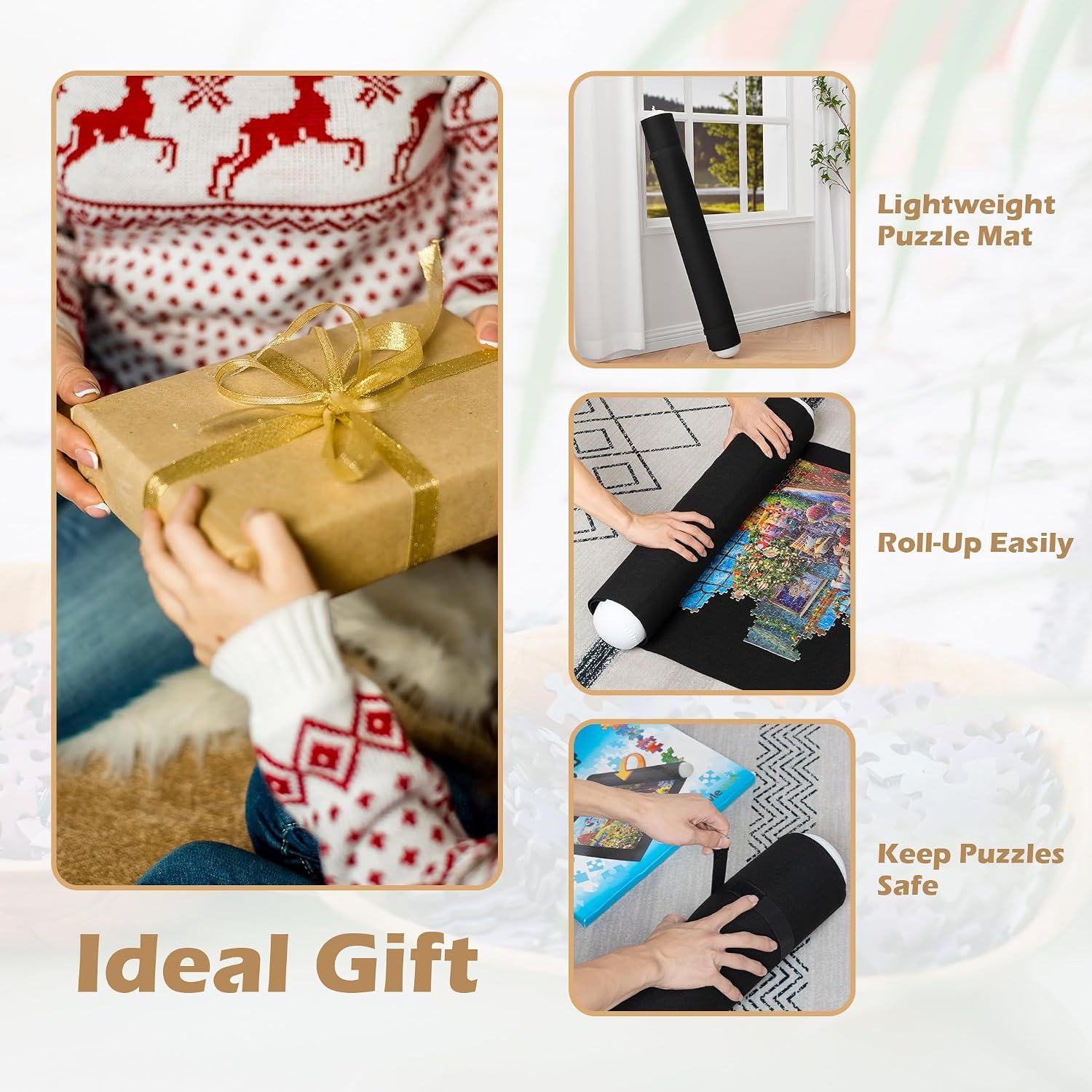
It may suit someone who enjoys working on a puzzle over several sessions but cannot leave it out on the table. It may also suit a person who wants a portable puzzle mat to move carefully between rooms.
It is less suited to expectations of a rigid carrying case or permanent display surface. No frame, mounting supplies or puzzle glue are included. Start with the job you need done, then check whether a flexible roll is the right format.
Care and storage between sessions
Keep the working surface clean and dry. Gently remove loose debris before putting the mat away so it is not rolled in with your puzzle.
The maker does not provide washing instructions or an ironing temperature. Do not assume felt can be machine washed or treated with heat. Check any care information supplied with the product before trying to remove marks or folds.
Keep sharp objects away from the inflatable tube. Store the included parts together so that both elastic bands are ready for your next session. These small habits make a puzzle keeper easier to use without adding much work.
Buying it as a gift
A roll-up mat can be a practical gift for a puzzle lover who has to share their table. Before choosing one, try to find out the finished size of the puzzles they usually enjoy.
Make clear that this is an accessory, not a puzzle set. The box contains the felt mat, tube and bands only. Someone expecting a new jigsaw will need a separate puzzle.
If you are unsure about fit, check the return terms before ordering. The stated window is 14 days from delivery, with returns unused, complete and in the original packaging. Delivery timing and warranty terms are not specified by the maker.
The short version
This jigsaw storage mat gives you a black felt surface, an inflatable tube and two bands for rolling away unfinished work. Its listed size is 46.3 x 26 inches, with capacity for puzzles up to 1,500 pieces, subject to their finished dimensions.
Measure first, use a smooth and level table, and handle the roll carefully. If flexible storage fits your routine, it offers a way to pause your puzzle and make room for the rest of your day.